If two malls both have bubble tea shops on every corner, why does one mall support five of them while another can't even keep two alive?
Building on my earlier post about why businesses selling identical products can have completely different outcomes, this article explores a more specific question.
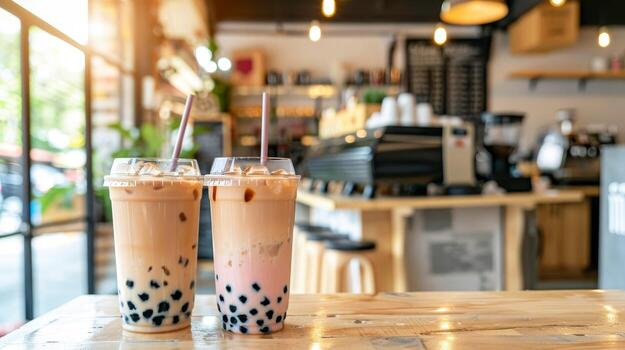
Have you noticed how some malls have like five bubble tea shops right next to each other, and somehow all of them are packed? Meanwhile other malls can't even keep two alive before one just quietly disappears. Same drinks basically, same crowd, same everything on paper. So what's actually going on there? I expected the busier mall to be the exception, not the norm. If five shops are all selling more or less the same drink, you'd think competition would thin that number out fast. But it doesn't always happen that way, and that's what made me want to actually dig into why. As I thought about it, this connects to Porter's five forces, specifically the idea of rivalry intensity. Bubble tea has close to zero switching cost. Nothing stops you from trying the shop next door tomorrow instead, there's no membership, no real relationship, nothing holding you in place. So in theory, that should make this category brutal for competitors. And it is, but only under certain conditions. That framework ended up explaining almost everything else I noticed. The first thing I realized is that the shops that survive together usually aren't actually selling the same thing, even if it looks that way walking past. One place is known for cheese foam, another does fruit tea, another is the brand everyone's obsessed with because it's from Taiwan and has a two hour line on weekends. They're technically all bubble tea, sure, but they've split the market into lanes instead of fighting over the same customer. In malls where shops die off fast, it's usually because both places are doing basic milk tea with nothing distinguishing them. And when there's genuinely nothing different, people just default to whatever's closer or cheaper that day, which is exactly the low switching cost problem Porter's framework predicts. Eventually one shop loses that fight completely. There's also a numbers issue underneath all of this, whether the mall actually has enough different types of bubble tea drinkers to support that many niches in the first place. A mall full of younger, trendier shoppers can probably sustain five shops because demand is spread across different flavors, price points, and aesthetics. A quieter mall might only have enough demand for one clear winner, and everything else fades out no matter how good it is. What actually surprised me most was how much brand loyalty plays into this. Some of these chains have genuinely devoted fans, people who will go to a specific mall just because that one shop happens to be there. That's a form of differentiation too, except it's not really about the product anymore, it's about the brand functioning almost like an identity. This lines up with research on consumer behavior showing that once a brand builds strong identity based loyalty, customers stop making decisions purely on convenience or price, and start making them based on attachment instead. A shop riding that kind of loyalty can survive in an already crowded mall because it's no longer playing the same game as everyone else around it. So putting it together, the malls with five surviving shops usually have shops that each found their own lane, whether through flavor, brand, or a specific type of customer. The malls where shops keep failing are usually just full of shops doing the exact same thing with nothing separating them, stuck competing purely on price and location until one runs out of room. It ties back to the convenience store post more than I expected going in. I used to think identical products meant the businesses selling them were basically interchangeable too. But watching this play out, I don't think that's true. The drinks might be nearly the same. The businesses selling them almost never are.